













Below, Julian Shapiro-Barnum shares five key insights from his new book, How to Grow Up Without Becoming a Grown-Up: Big Lessons from Little Kids.
Julian is a comedian, interviewer, and author best known for creating Recess Therapy, a wildly popular online series in which he interviews young children about life’s biggest mysteries. He also created Celebrity Substitute, in which major stars from music and Hollywood spend a day teaching at public schools around New York City.
What’s the Big Idea?
Growing up doesn’t have to mean losing the best parts of being a child. By embracing children’s emotional honesty, creativity, openness, and optimism, adults can lead richer lives and contribute to a better world.
Listen to the audio version of this Book Bite—read by Julian himself—in the Next Big Idea App, or buy the book.

1. Feel your feelings in real time.
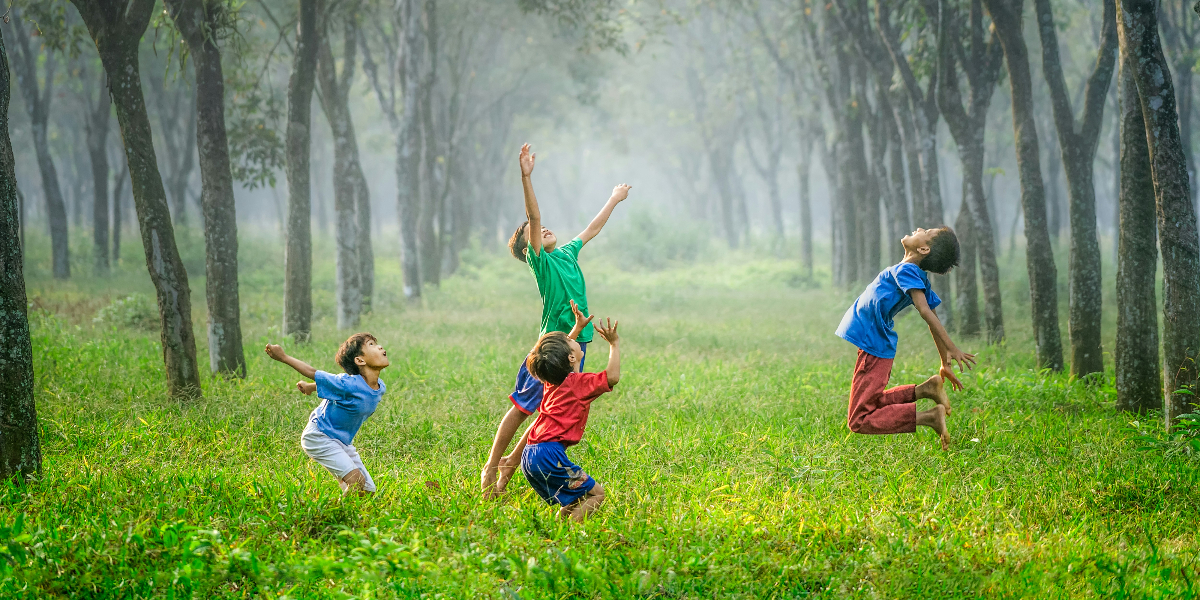
When kids are upset, they throw a temper tantrum. When they’re happy, they jump for joy, run around, and giggle. When they’re sad, they cry. It happens right then, in real time, and then it’s over.
Adults are different. I am a prime example of this. If someone says something that hurts my feelings, if I get disappointing news, if something doesn’t go my way—nine times out of ten, instead of processing that feeling in the moment, I save it for later. I bottle it up for a time that feels more convenient, more palatable, more appropriate.
What kids understand instinctively is that when you delay a feeling, you don’t avoid it, you just carry it longer than you need to. The sadness, the anger, the embarrassment: it stays with you. It lingers. We end up living with discomfort far more than we have to, simply because we won’t give ourselves thirty seconds to feel it when it arrives.
Kids let feelings flow in and out of them. They don’t hoard emotions. When you feel something, give yourself the space to feel it. Your overall health will thank you.
2. Date your friends.
No, not like that. What I mean is that many adults operate under the assumption that certain kinds of intimacy are reserved exclusively for a romantic partner. Not just physical intimacy—though yes, that too—but the softer stuff. A nice dinner out. A cozy night watching a movie. Cuddling on a couch. The kind of closeness that makes you feel genuinely seen. Kids haven’t learned that rule yet. And watching them, I’ve come to believe it’s one of the worst rules adults have ever invented.
Kids give 100 percent of themselves to their friends. They’re physically affectionate: hugging, lying in the grass together, building daisy crowns, reading each other’s palms. There is a depth of closeness in children’s friendships that most adults never reach, and I think it’s because we’ve decided, somewhere along the way, that getting that close to a friend is somehow strange or excessive.
“Kids give 100 percent of themselves to their friends.”
It isn’t. Taking a friend on a proper friend date is a beautiful thing. You don’t have to wait. You can do it now, and it can be genuinely fulfilling. Kids do it constantly, without a second thought. Getting close to a friend is vulnerable. It can feel scary. But it can also be one of the most rewarding things you do. Don’t save it for later.
3. Your imagination is out of shape.
Kids have extraordinary imaginations, and what’s really remarkable is what they do with them.
Kids take something that they’ve only ever dreamed of and start acting it out. They dream something up and then put it in their body. They practice the motion of turning hope into action. What that process does—without them even knowing it—is get them into the habit of taking an idea and actualizing it. Adults dream big too, but we tend to stop there. We fantasize and then the fantasy just…sits there. We fantasize and then it stops there. We’re out of practice at putting our dreams on our feet.
Kids aren’t playing pretend because they don’t want to do these things for real. They’re playing pretend because they can’t do these things for real yet. They don’t have the access, the resources, the freedom. But you do. If your childhood self could see the opportunities available to you right now, they would be absolutely losing their mind.
That open mic you’ve always wanted to try. That trip you keep moving to “someday.” Your imagination is still in there, it’s just atrophied. Like any muscle, it needs to be worked. Start small. Practice the motion. Build it back up. Be your childhood self’s wildest dream.
4. Break as many rules as you can.
As we get older, we accumulate rules. Don’t do this. You can’t do that. That’s not how it’s done. What’s strange is that most of those rules aren’t coming from anywhere official. Nobody handed you a rulebook. You wrote it yourself.
Kids hate rules. They push back against authority constantly. Their biggest frustration is adults telling them what they’re not allowed to do. And then, slowly, they grow up and become those adults—not just following the rules, but enforcing them on themselves, often without realizing it.
I’m not talking about the rules that keep us safe or keep us from hurting one another. I’m talking about the self-imposed rules we create to avoid embarrassment, to stay inside our comfort zone, to manage how we’re perceived. We build a box and then live in it and call it being responsible.
“Nobody handed you a rulebook. You wrote it yourself.”
You are so much bigger than the box you’ve built. The first step to getting out of it is noticing it’s there—noticing which limitations you’re setting for yourself, and asking whether they’re actually serving you or just keeping you small. You don’t have to follow rules you invented. Kids figured that out early. It’s not too late to catch up.
5. Little things add up.
The world is in a tough spot politically, climatically, and interpersonally. Things be tough out there. And when things feel that broken on that scale, it’s easy to arrive at a very reasonable-sounding conclusion: nothing I do will make a difference.
Kids do not feel that way. Kids genuinely believe their actions matter. Some of that comes from the stories adults tell them. We tell children that their voices are important, and they believe us and live accordingly. But it’s more than just stories. Watch what kids actually do.
Kids turn off lights. Kids pick up trash. Kids push their parents to donate, switch to cleaner energy, and be more thoughtful about how they treat people. They are remarkably diligent about small, concrete acts of goodness.
When we adults get overwhelmed by how frightening everything feels, we do nothing. And nothing does nothing. But if we all did the small things—if we all acted like the adults kids seem to believe we’re capable of being—those little things would start to add up. They would build. I’ve seen it happen. I’ve seen small actions grow.
The little things are the only place where change actually begins.
Enjoy our full library of Book Bites—read by the authors!—in the Next Big Idea App: