














Below, co-authors Sarah Goodyear, Doug Gordon, and Aaron Naparstek share five key insights from their new book, Life After Cars: Freeing Ourselves from the Tyranny of the Automobile.
Sarah is a journalist who has covered cities and transportation for publications such as Grist, CityLab, and Streetsblog. Doug is a TV producer and writer who is also a neighborhood safe streets advocate, better known online as Brooklyn Spoke. Aaron is the founding editor of Streetsblog. Together, the three of them host the War on Cars podcast.
What’s the big idea?
Cars are perhaps the most significant invention in the history of humanity. They influence nearly every aspect of our lives every day, from where we live and how we get around to how we experience the community around us. They define the shape of our cities, affect our own health and safety, and have significant effects on our environment and climate. Reimagining our relationship with automobiles can make individuals and society happier, healthier, and safer.

1. Learn to see cars.
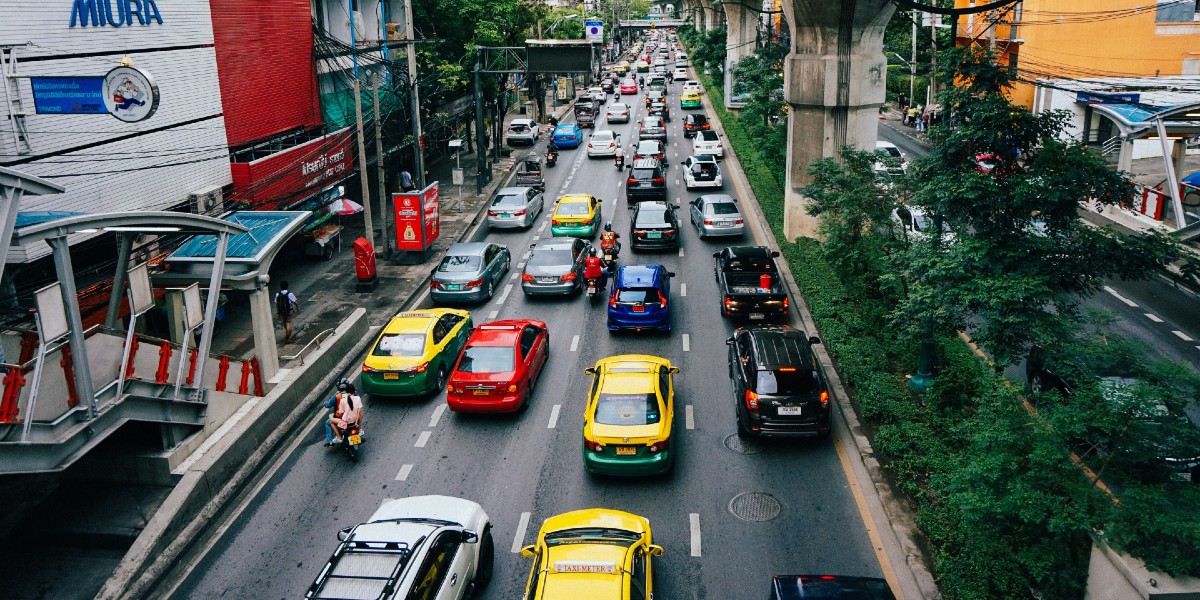
Cars are everywhere, yet we don’t tend to see them. As big as they are, cars have become essentially invisible to us because they are such a deeply ingrained feature of modern life. So, start looking harder.
Try walking in a place you would normally only consider driving through (carefully!) and allow yourself to feel the magnitude of the effects cars have. Sit in a park, close your eyes, and start to listen—chances are your ears will never be free of the sound of passing cars nearby. Look at the car storage along the curb on your street and imagine what that space could be used for if those gigantic hunks of metal weren’t there. Leave your car at the edge of a parking lot, walk across the asphalt, and ask yourself whether this is a place worth being in and whether this is the best use of our precious land.
2. Cars ruin childhood.
In 1969, nearly 50 percent of kids in the U.S. between the ages of five and fourteen walked or biked to school. Today, that number is around 11 percent. According to the Centers for Disease Control and Prevention, only 24 percent of children aged 6 to 17 get the recommended 60 minutes of physical activity each day. A lot of that has to do with the ways in which we’ve made it hard for kids to get anywhere other than in a car. This is bad for their health, and it’s also bad for their sense of independence.
Bruce Appleyard, an urban designer and professor of city planning, worked with nine- and ten-year-old children from two suburban communities. One had streets with light traffic where children were generally able to walk and bike on their own. The other had heavy traffic, where children traveled almost exclusively in a parent’s car. Using a technique called cognitive mapping, Appleyard asked the kids in each community to draw maps of their neighborhoods and include destinations that were important to them, such as their schools and friends’ homes, as well as natural markers like trees.
“Kids deserve safe streets where they can get around independently.”
In the community with heavy traffic, “the children … were unable to represent any detail of the surrounding environment.” Meanwhile, the children in the community with light traffic created far more detailed neighborhood maps, “drawing more of the streets, houses, trees, and other objects, and including fewer signs of danger or dislike and fewer cars.” Their maps also noted 43 percent more locations where they played than the maps drawn by children in the neighborhood with heavy traffic. Kids deserve safe streets where they can get around independently.
3. Cars make us lonely.
In 1969, UC Berkeley professor Donald Appleyard—Bruce’s father—studied three different streets in the same part of San Francisco, with automotive traffic that they characterized as heavy, medium, and light. What they discovered was that car traffic eroded, and in some cases destroyed, the delicate human social environment of the streets they were looking at. The more cars, the worse the damage.
On the heavy-traffic street, people reported an almost total absence of interaction with their neighbors. On the light-traffic street, people had three times as many local friends and twice as many acquaintances as those on the heavy street. And on the medium street, Appleyard noticed that rising traffic was endangering the already fragile relationships that existed there.
In effect, it appeared that cars were killing the human social life on heavy- and medium-traffic streets. Appleyard and his team even found that more people cited concerns about traffic degrading their neighborhoods than about crime.
Humans are social creatures. As much as cars can get us to work, school, or the grocery store, they make it harder for us to connect with other humans where we live. Building places where cars aren’t omnipresent is a great way to build stronger connections between people.
4. Our “love affair with automobiles” was more like an arranged marriage.
It’s often said that Americans have a “love affair with automobiles.” But early history tells a different story. In 1910, two years after the introduction of the Model T, nearly 1,600 people died in motor vehicle crashes. In 1920, 12,155 people died. In 1924, the death toll was 18,400 people.
“The saying ‘America’s love affair with automobiles’ didn’t spring out of nowhere.”
The crisis was so obvious and widespread that the New York Times ran a story that same year headlined “Nation Roused Against Motor Killings” above an illustration of a caped figure with a skull for a face driving a massive, open-topped car over a crowd of terrified people, mostly women and children. The caption: The Grim Reaper drives a car.
Even the saying “America’s love affair with automobiles” didn’t spring out of nowhere; it was pushed on Americans. University of Virginia Historian Peter Norton discovered that it was popularized by a 1961 NBC television special. Called Merrily We Roll Along and starring comedian Groucho Marx, the special was sponsored by DuPont, which at the time owned a 23 percent stake in General Motors. In the special, Groucho says that “our love affair with the automobile” started long ago and that it “changed our whole way of life.” He repeated the phrase so much that it became part of the popular lexicon almost overnight.
5. To get to life after cars, find your people.
If you’ve ever thought you’re alone in questioning the role of cars in society, you might be surprised by how many people agree with you…so, find your people.
If you’re on social media, start following like-minded folks to learn about what is going on nationally and internationally, so you can bring those ideas home. If you’re not into social media, local bike stores organize group rides for people of all abilities.
Join a local pedestrian, cycling, or transit advocacy group or local parks conservancy. You’ll almost certainly meet some people who “get it”—and who can help you start reimagining streets so they are safe places for walking, cycling, or connecting with others. Finding your people can help confirm that the problem isn’t you—it’s the cars.
Enjoy our full library of Book Bites—read by the authors!—in the Next Big Idea App: