














Below, Jack Parlett shares five key insights from his new book, Flamboyance: The Power of Living Boldly.
Jack is a writer, poet, and scholar. He is also the author of Fire Island: A Century in the Life of an American Paradise, which was named a New York Times Notable Book and a Book of the Year in the New Yorker, and his writing has appeared in the New Yorker, Literary Hub, Boston Review, Document Journal and elsewhere.
What’s the big idea?
Flamboyance is much more than flashy appearance or stereotypical “showiness.” It is a powerful human force of creativity, self-expression, resistance, passion, and freedom that everyone can access.
Listen to the audio version of this Book Bite—read by Jack himself—in the Next Big Idea App, or buy the book.

1. Flamboyance ignites every aspect of our lives. We need a new definition.
The word flamboyant comes from the French verb flamboyer, to blaze, to flame, and it is this fiery metaphor that informs its usual definition. To be flamboyant is to burn brightly, to light up a room. It means commanding attention because of your stylishness, confidence, and exuberance.
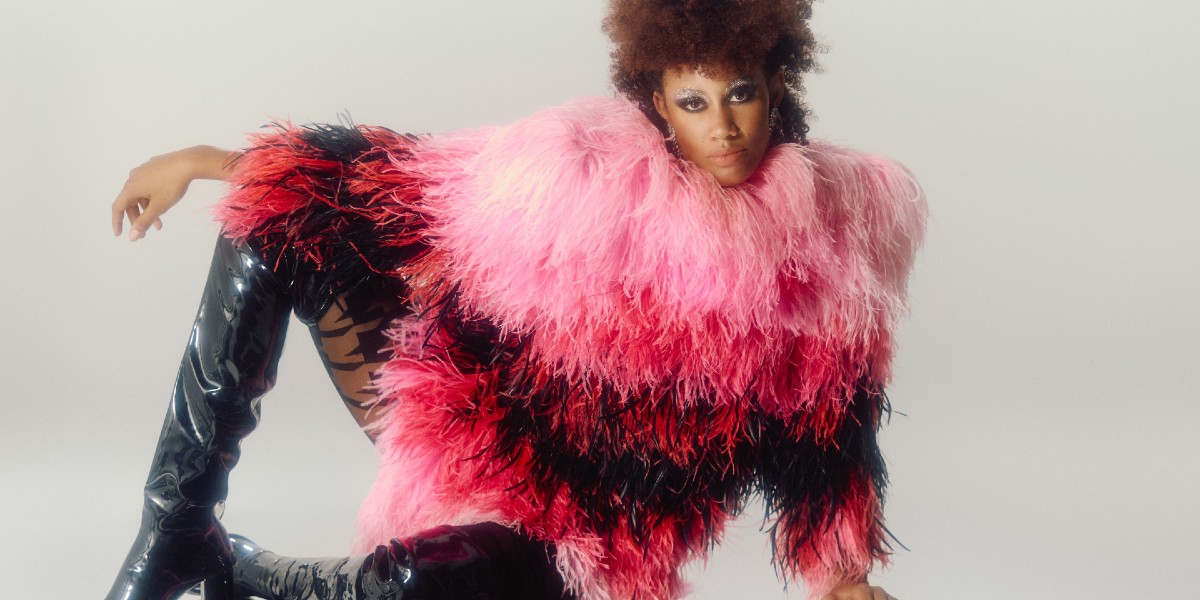
What do you think of when you hear the word ‘flamboyant’? Maybe your mind goes first to showgirls in feathers, of dapper dandies and glittering drag queens; a carnival or a bright pink flamingo. These things are, certainly, flamboyant, but they do not tell the whole story.
While ‘flamboyant’ is the word used to describe such brightly colored things and would appear to be value-neutral—neither compliment nor critique—it can possess a pejorative force. In particular contexts, it has often been used as an old-fashioned euphemism for gay, or more broadly for a certain excessive or over-the-top quality. The word ‘flamboyant’ has too often been wielded in this way: to strongly imply something, with an exaggerated wink; to emphasize difference or falsehood; to keep us small; to keep us in our place.
Flamboyance, in this sense, shares a family resemblance with camp, that theatrical sensibility, loud and parodic, and most commonly associated with feminine-presenting gay men. But if we broaden our definition and illuminate its many dimensions, we can see that all of us have a flamboyant side—an inner flame. Like fire itself, flamboyance is a fundamental aspect of human life, and a vital force behind art and entertainment, ritual and protest. Anyone can be flamboyant, and all of us can benefit and learn from its lessons.
2. Cultivate your imagination. Flamboyance is a creative act.
The poet Harriet Monroe was onto something when she wrote, during the roaring age of the 1920s in America, that “Flamboyance is at least the beginning of art.” She argued that while many people’s lives in this era were defined by order and regularity—three-meals-a-day, wallpapered homes, a suspicion of dissent or revolution—they were simultaneously drawn to the flamboyant and sometimes hedonistic spectacles of popular culture, meaning the flappers and the fireworks and the jazz performances. These entertainments spoke to a desire for the flamboyant that lives in all of us, Monroe suggested, an impulse that also goes by the name ‘imagination,’ or that capacity to envision other, more colorful ways of being and to create.
“Like fire itself, flamboyance is a fundamental aspect of human life.”
Indeed, flamboyance and art are deeply intertwined, and there is a long tradition of thinking about creativity as a fire: the spark of inspiration. The word ‘flamelike’ was, in fact, a favorite of that most flamboyant of figures, Oscar Wilde, during his time as an undergraduate at Oxford University in the 1870s. Wilde is rather like a textbook example of the flamboyant artist: louche and dandyish, aesthetically inclined and dressed to the nines, reclining in an exquisitely curated room of curiosities.
Fashion and interior design are certainly two modes for expressing creativity, and there have been countless artists and entertainers whose flamboyance is an inspiration, providing us blazing models for fantasy made real. But if we think about flamboyance not just as an outward expression, but an inner capacity—the act of creativity—we might discover our flamboyant side without even having to step outside.
3. Refuse the status quo. Flamboyance is a protest.
Perhaps another way flamboyance differs from camp is in its relation to politics. Where camp is often depoliticized, or apolitical—as Susan Sontag famously, and somewhat controversially, put it—flamboyance is more than happy to stand up and be counted. It is the force of collective anger and the desire for change, harnessed into a street theater, designed to grab our attention.
There are many ways to protest in our everyday lives, both big and small. Marching on the streets is one, but so is standing up for someone, calling out an injustice you witness, or subverting the negative force of a slur and reclaiming it for your own, as so many marginalized communities have done over time. It is hardly surprising that flamboyance has been a driving force for many liberationist movements and even inspired the names of certain groups, such as the Flamboyant Ladies, a theater collective of Black women artists that formed in Brooklyn in the 1970s.
By refusing to accept reality as it is currently configured and resisting the offensive rhetoric of those intolerant of difference or diversity, we tap into the radical power of flamboyance, forged in solidarity. It is about finding joy in a world that often feels designed to deprive you of it.
4. Connect with your passion. Flamboyance is an expression of our deepest feelings.
To live flamboyantly is to embrace the emotions that run hot in us: love, rage, longing, desire. As the poet and artist John Giorno once put it, “You got to burn to shine.” Some of the world’s most flamboyant art forms—flamenco, the blues—are those dedicated to the expression of our deepest feelings, and give not only to the pain of a performer, but of a people.
“To live flamboyantly is to embrace the emotions that run hot in us.”
Hence, such feelings can be unwieldy or dangerous; they can lead us down the paths of self-destruction and addiction. Popular culture, sadly, never lacks for cautionary tales in this area, and in the wake of tragedy we reach for consoling tropes, like the proverbial idea that ‘the light that burns twice as bright burns half as long.’
Another negative connotation of flamboyance is the idea that it is merely a cover-up for pain and insecurity; the tears of a clown. And yet, there is no inherent connection between flamboyance and self-destruction. What I believe flamboyant art has most of all to teach us is the danger of denying or repressing passions—its greatest gift is the affordance of a space, an occasion, or simply a moment, to truly feel them.
5. Flamboyance has never been more vital.
Flamboyance informs and illuminates so many of our lived experiences. In this sense, it has never been out of fashion.
At the same time, it has never been more important. Flamboyance is one of the most powerful tools we have in the face of prejudice, a counter to the continued attacks on marginalized communities, from the suppression of drag queens to widespread attempts to roll back inclusion and diversity across the board. In a frightening and politically uncertain time, flamboyance is a beacon of hope and resistance. A way of fighting fire with fire.
Enjoy our full library of Book Bites—read by the authors!—in the Next Big Idea App: