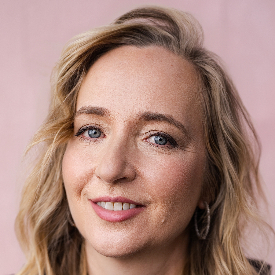










Below, Ijeoma Uchegbu shares five key insights from her new book, Chain Reaction: How Chemistry Shapes Us and Our World.
Ijeoma is a global leader in pharmaceutical science and academia. She serves as president of Wolfson College, Cambridge; professor of pharmaceutical nanoscience and Provost’s Envoy for Race Equality at University College London; and governor of Wellcome, one of the largest biomedical research charities in the world. She is also the founder and Chief Scientific Officer of the pharmaceutical company Nanomerics. Among many other honors, she was made Dame Commander of the British Empire in 2025.
What’s the big idea?
Everything—from the human body to life-saving medicines and everyday materials—is built from atoms and chemical bonds. Understanding chemistry helps us understand life itself.
Listen to the audio version of this Book Bite—read by Ijeoma herself—in the Next Big Idea App, or buy the book.
1. Atoms to molecules.
Everything all around us is made of atoms. These atoms are held together by chemical bonds to make molecules. The bonds that keep a molecule together are incredibly strong. They cannot be broken down easily. The molecules are then held together by other weaker bonds, as is the case for water.
Water consists of two elements: two atoms of hydrogen and one atom of oxygen. These atoms are held together by very strong bonds. However, individual water molecules are also bonded together by weaker bonds, and these bonds guarantee that all the water molecules stay together when you pour yourself a glass to drink.
Though water molecules don’t tend to wander off on their own because of these weaker bonds, there is one instance when they do wander off: when water has been turned to steam through heating. As the weak bonds between water molecules are broken up while heating, you get water molecules floating off on their own and mixing with molecules in the air. You can observe this as you watch steam literally disappear before your eyes as the molecules go their separate ways.
The entire universe is made of atoms. Atoms are locked into one another, via various chemical bonds, to form molecules. We, and all materials, are simply a bunch of atoms.
2. My passion for chemistry.
I can pinpoint the exact time that I decided that chemistry of medicines was my destiny. It all began one day when a dear family friend arrived at our home in Nigeria, where we lived at the time. Let’s call her Nonye. At the time, Nonye was about 17 years old, two years older than I was, and was a beautiful, tall, willowy girl with thick dark hair that she always wore in tidy plaits around her head. She had clear skin and a very warm open smile. Her eyes danced in mirth virtually all the time. She joked around a lot and often teased me in a sisterly manner.
However, not long after Nonye’s arrival, she fell gravely ill. Over the next few days, her illness grew worse, and she suffered with chills, bed-rattling rigor, and a disappearance of herself—symptoms which were unbelievably frightening.
We watched our lovely Nonye start to fade away. We saw her become quieter and more motionless with each passing day, only rousing to work through a roasting fever once a day. Her food intake was minimal to none, and her water intake had to be forced down by one of us. We all feared she was heading over the line. The local hospital was apparently dysfunctional and not worth a visit. So, in desperation, my father sent for an expensive doctor with a formidable reputation.
“I can pinpoint the exact time that I decided that chemistry of medicines was my destiny.”
The doctor arrived and examined Nonye for all of ten minutes before prescribing a costly antibiotic, called gentamicin, and an intravenous drip bag. He rigged up the intravenous drip bag by hooking it to a protrusion on the wall. By now, Nonye’s breathing seemed to have long pauses, which terrified us all. The good doctor carefully added gentamicin to the drip bag once a day for a few days, returning to visit every morning. I’ll never forget how the antibiotic first went into that drip bag. I watched the squirt from the needle mix well with the massaged bag and disappear into the clear liquid. It looked like nothing was happening.
However, the day after the first dose of gentamicin, Nonye sat up in bed in Lazarus-like bewilderment. Before the antibiotic intravenous drip, we had been helping her with her toileting, using a makeshift bedpan made of an old, powdered milk tin and prodding her to turn over just to make sure she was still breathing. On the first day, after her first dose of gentamicin, she spoke in a quiet, raspy whisper, but as we hadn’t heard her voice for the better part of a week, it was an amazing sound. It was a symphony of pure hope in a few whispered words. Nonye quietly asked to be led to the toilet, refusing the bedpan, even though it was my job to clean the bedpan and I had already done it that day. We all started crying in relief.
She went on to recover from what we later learned was a urinary tract infection. She left our house after a few weeks and made her way home. That was it. I was sold. Whatever that medicine was, I had seen the power of pharmaceutical chemicals with my own eyes, and at 15 years old, I honestly thought I had witnessed a miracle. I still feel a certain lightness when I remember that week.
3. We are all walking chemical reactions.
In essence, our bodies are composed of a few molecules: water, proteins, carbohydrates, fats, genes, and some other molecules. However, we do not present as a puddle. We present as complex beings. This is because our molecules are held together by chemical bonds to form cells.
The exterior of these cells is mostly made of fats, and inside of these cells sit our proteins, the workhorses of our cells that do the heavy lifting. Proteins make sure that the myriad chemical reactions going on in our bodies proceed at pace. Our genes sit inside a special compartment in our cells called the nucleus. Carbohydrates, such as glucose from our diet, power our cells and literally keep the lights on. Our cells are then held together by chemical bonds to form our organs, and our organs are then held together by chemical bonds to form us. Chemical bonding transforms the mythical puddle of molecules into the glory that is us.
Speaking of the protein workhorses of our cells, there is a special protein in our blood called hemoglobin. It keeps us alive and makes our blood red. When we breathe in a cocktail of gases in the air, this protein selects oxygen from the other gases, binds with it, and transports it to our cells, where hemoglobin then releases oxygen with exquisite precision so that our cells can breathe. This goes on and on until this oxygen dance with hemoglobin stops. When it stops, we stop and end.
4. Cooking eggs.
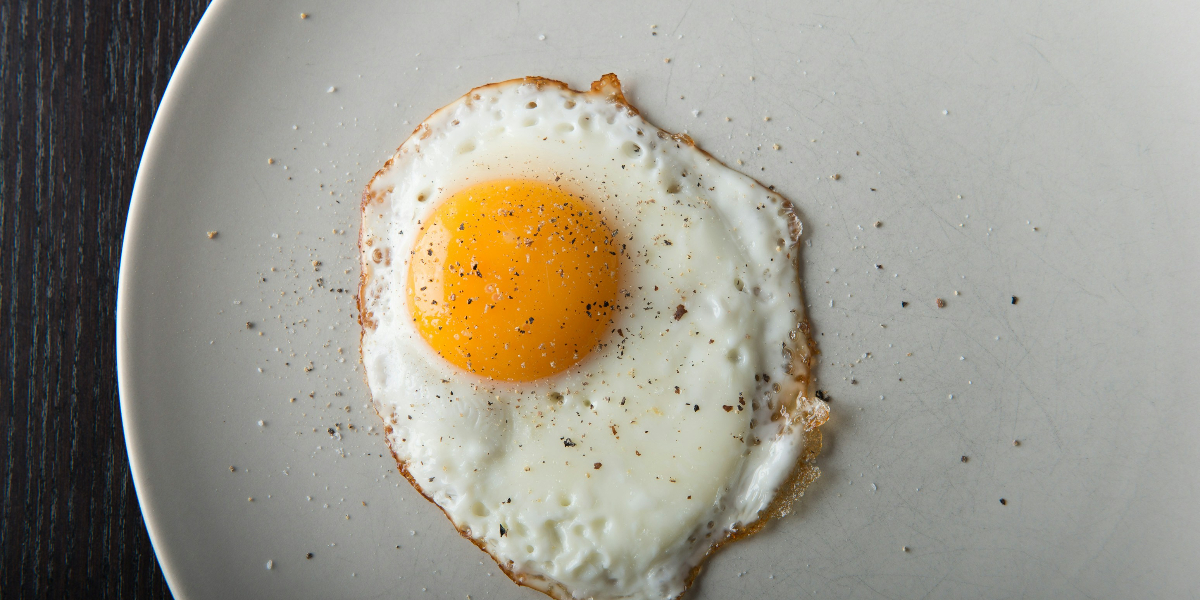
When we fry an egg, why does the white go hard while the egg yolk remains runny? This is, of course, if you like your eggs over easy.
Eggs are packed with protein, but they are also packed to the brim with water. Three-quarters of the egg white is water, and half of the egg yolk is water. In an uncooked egg, the egg white proteins sit curled up in little balls, all making weak chemical bonds with the water in the egg white. When heat is applied to your egg in your frying pan, the bond between the proteins in the egg white and water breaks, and the egg white proteins stretch out, as if uncurling from a long slumber. As they stretch out, they expose parts of themselves that are not able to bond with water—parts that are hydrophobic, meaning water-hating. The egg white proteins then form new strong bonds with each other as more heat is applied to the cooking egg. In the egg white, this turns the liquid egg white into a solid, white, delicious mass.
This uncurling and protein-protein bonding occurs at a slightly higher temperature in egg yolk, giving you a solid egg white and a runny egg yolk to dip your bread in.
5. Plastics.
When we speak of plastics, we often refer to them as pollutants and a nuisance. This is undoubtedly true. However, as a 20th-century wonder material, plastics have transformed our lives in ways we could never have dreamed of.
Our lives have been made infinitely more comfortable, and indeed survivable, thanks to the development of plastics. Let’s imagine a world without plastics for a moment- the world of our great-grandparents and grandparents. Imagine you have traveled back to the brave old plastic-free world. The first thing you must do is go shopping for food. You only buy what you will be able to carry in a brown paper bag—chest-high, in order to prevent the contents from weighing down the paper. You’ve had to be careful not to include too many heavy glass bottles filled with milk or apple juice in your shopping, as you can’t carry them. Heavy lifting that is now normally done by lightweight plastics would have had to be done by you.
There is a risk that, on this shopping trip, your shopping will break through the fragile paper bag anyway, especially if it is heavy or contains a wet piece of fish, for example. Risk realized, your shopping is now littering the kitchen floor. This shopping is now a gravitationally fuelled mess, a consequence of your world being free of low-density polyethylene in which the polymer chains are branched like a tree canopy, making the material amenable to stretching without breaking, and, crucially, hydrophobic and hence waterproof.
Back at the shop to replace the food that could not be scraped off your kitchen floor, you notice more spoiled food on display. The fruit, vegetables, and meat are not shrink-wrapped, which, in the modern world, limits spoilage and preserves them longer in their freshly picked or prepared state. In the plastic-free world, you would love to sniff a piece of fish before you buy it and check the use-by date on the packaging. However, because food spoils quickly, you cannot examine it before you buy. Your friendly shopkeeper makes sure of that. You can only truly examine your groceries after you have bought them.
“Our lives have been made infinitely more comfortable, and indeed survivable, thanks to the development of plastics.”
Due to the inherent short shelf life of fresh food, in this challenging time, you end up paying a high price for your family’s nutrition. If things get really bad with your family finances, you would not be able to afford to replace the spoiled potatoes that you brought home, or indeed the blue-specked loaf of bread, decorated with mold, that the shopkeeper slipped into your paper bag when you were distracted by his sales patter. The inability to afford your family’s nutrition means that you could lose a child, or a brother, or a sister to malnutrition, just like that.
There are no high-functioning engineered materials in this plastic-free world. Cross-linked, high-density polyethylene pipes, which safely transport the cold-water supply from the main pipe outside your house into your sparkling kitchen, are unavailable. You are in the era of lead water pipes. You and your children consume copious amounts of lead from those pipes, and your children suffer from delayed cognitive development as a result. You wring your hands in sorrow as you watch your children fail to meet their milestones.
If you or your children fall seriously ill, a hospital stay would show you how much disposable plastics make the administration of healthcare possible in the modern world. Disposable plastic syringes, made from the lightweight yet rigid polypropylene, that prevent germs from being transferred from patient to patient, are nowhere to be seen. Instead, there are glass syringes that have to be boiled in order to sterilize them. This constant need for repeated sterilization slows medical procedures down, and on some occasions, some microbes slip through the net, infecting people when sterilization has failed and the syringes are reused.
The bed you are lying on in the hospital lacks a polyethylene-lined bed covering that would prevent mattresses from being soiled when a patient bleeds, wets themselves, or dies in the bed. Such a polyethylene lining would prevent this soil from being transferred unwittingly to you and possibly killing you with an infectious disease. People die more often in a plastic-free world. We live or die by atoms and their chemical bonds.
Enjoy our full library of Book Bites—read by the authors!—in the Next Big Idea App: